An introduction to lambda values, R-values and U-values
If you’re new to the industry, you’ll soon discover that the word ‘value’ is thrown around like there’s no tomorrow. More often than not, this ‘value’ is accompanied by a letter – which can lead to all sorts of confusion.
What is Lambda value?
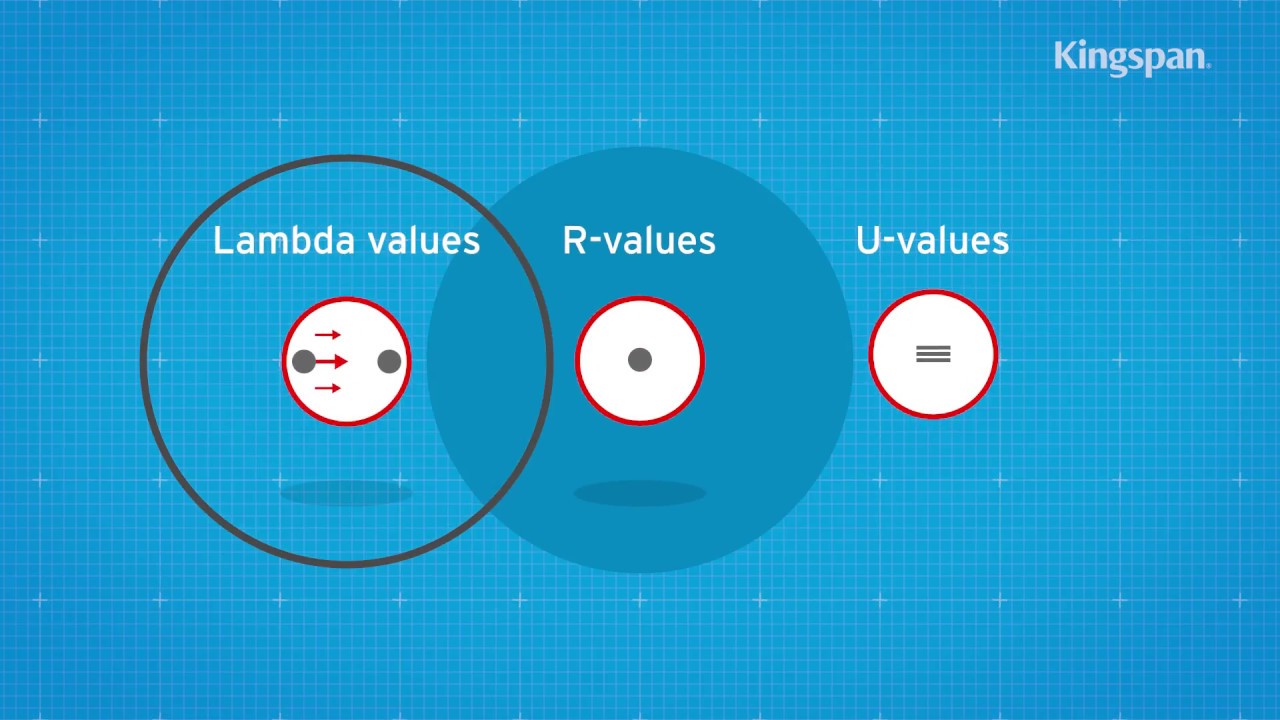
The lambda value, also portrayed as ‘K-value’ or ‘λ-value’, measures a product’s thermal conductivity in units of W/mK.
Good insulation will have as low a lambda value as possible to reduce heat loss.
What about an R-value?
A product’s R-value measures its thermal resistance in units of m²K/W.
By dividing a material’s thickness (in metres) by its lambda value, you can discover how well it resists heat transfer at a specific thickness.
The best insulation will have a high R-value at a low thickness, indicating that it is just as good at reducing heat loss as its thicker counterparts.
What is a U-value?
A U-value is a sum of the thermal resistances of the layers that make up an entire building element – for example, a roof, wall or floor. It also includes adjustments for any fixings or air gaps. Our U-value calculator can make calculations easier, click here to access.
A U-value value shows, in units of W/m²K, the ability of an element to transmit heat from a warm space to a cold space in a building, and vice versa. The lower the U-value, the better insulated the building element.
A building element’s U-value is extremely important as there are certain standards that should be reached according to Building Regulations / Standards.
Page reviewed 19/02/2025


