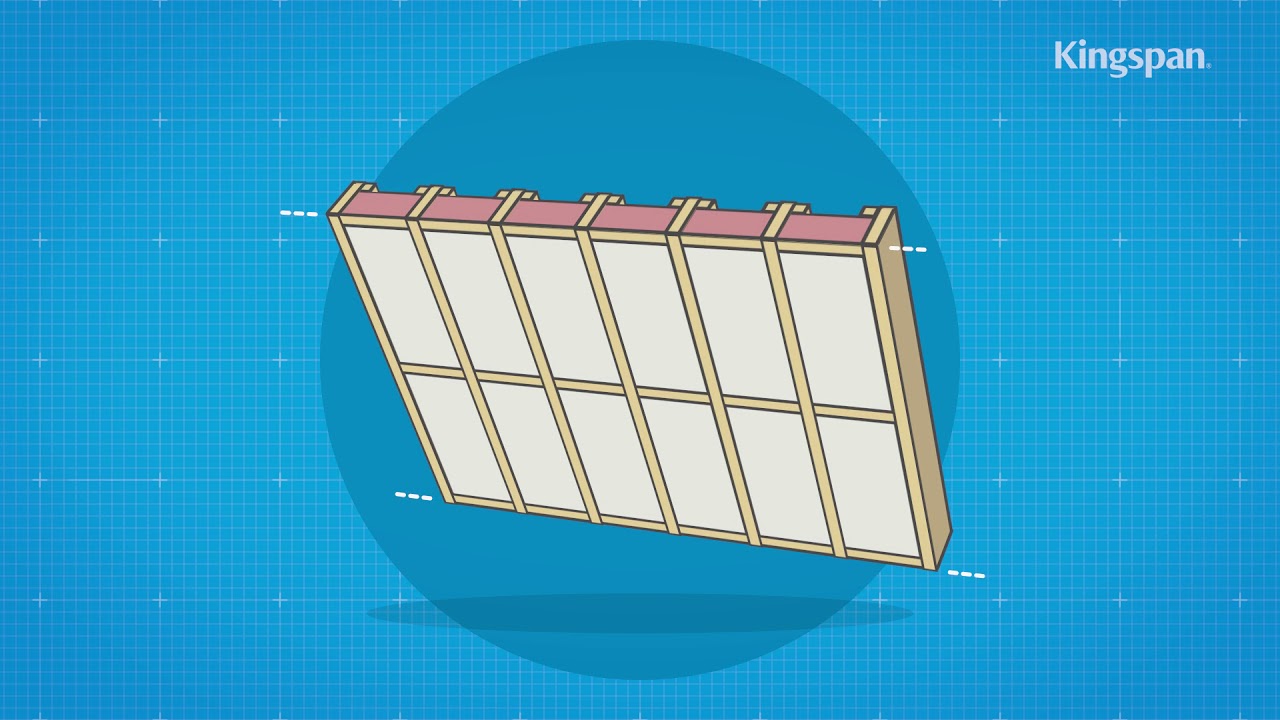
When insulating a pitched roof at rafter level there are a number of key design considerations which will affect the build-up of the roof and the choice of insulation. In this article, we explore some of the options available.
When we are talking about rafter level, we mean the timbers that support the pitched roof. Joists are the flat horizontal beams at ceiling level.
The main decision to make when insulating a pitched roof is if you are going to have a warm roof or a cold roof. This will depend on the construction of your roof, and if it is a refurbishment, or whether the roof tiles are going to be removed.
The main difference between the two is the location of the insulation.
- A warm roof is where the insulation is above and between the rafters (so the rafters are kept warm).
- A cold roof is where the insulation is between and below the rafters (and the rafters remain cold).
For a new build, or if a detached dwelling is being re-roofed, then there is scope to choose the build-up of roof that suits your purposes best. However, if the roof insulation is being added to an existing roof, for example as part of a loft conversion, then a cold roof is the most likely solution as you can’t insulate above the rafters.
Warm pitched roof
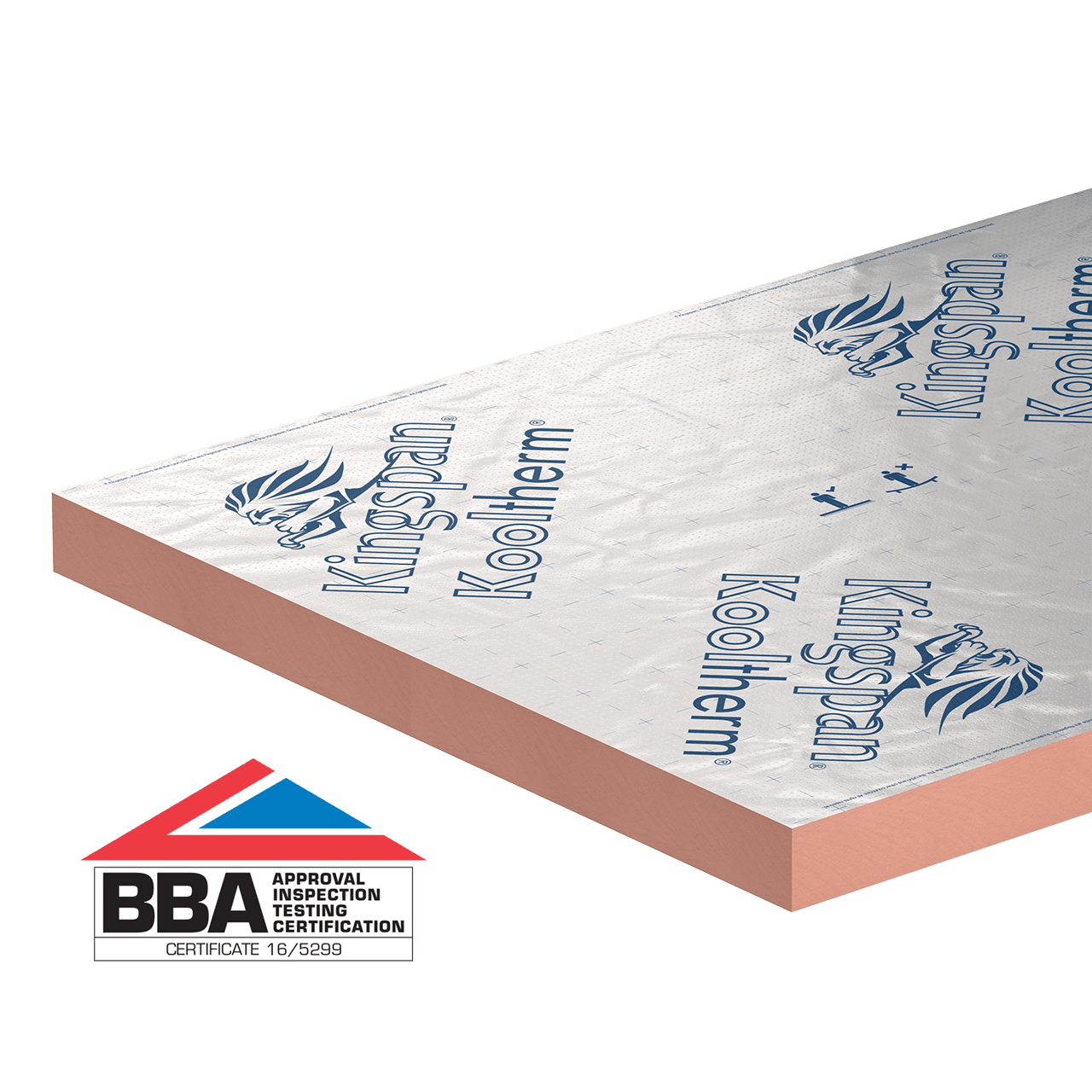
To create a warm pitched roof, insulation such as Kooltherm K107 Pitched Roof Board, should be fitted between and over the rafters. As this requires fitting insulation above the rafters, the roof covering will have to be removed in order to fit the insulation. This roof type will require a breathable membrane, like nilvent, to be fitted above the insulation.
The construction build up for this can be seen on our online U-value calculator.
Cold pitched roof
In this case, we would suggest fitting Kooltherm K107 between the rafters and Kooltherm K118 Insulated Plasterboard to the inside face of the rafters. Usually, this construction is a ventilated roof that will have a sarking felt. Ventilated roofs require a 50 mm air gap above the insulation. Timber stop battens can be nailed into the side of the rafters to give the correct air gap when installing the insulation. The insulated plasterboard should then be placed with the long edges running across the rafters.
The construction build up for this can be seen on our online U-value calculator.


Building regulations
In England and Wales, the improved U-value for refurbishing a pitched roof on a domestic property is 0.16 W/m²K.
If the above target isn't technically feasible to achieve, or won't provide payback within 15 years, you should look to achieve the best possible U-values which are achievable. In all cases, you should reach, or improve upon, the threshold values in the regulations (0.35 W/m²K).
In Scotland, the area-weighted average U-value required for refurbishing a domestic pitched roof is 0.12 W/m²K.
If meeting this U-value is impractical, the roof can be insulated to a lower standard but no worse than a U-value of 0.35 W/m²K. This should be compensated for by upgrading the U-values elsewhere in the construction.
When specifying the insulation for the pitched roof it is important that the thickness of insulation used achieves the required U-value. This can be done using our U-Value calculator.