The space heating/cooling demand for full Passivhaus is far lower than for an average existing UK home - estimated to be around 130 kWh/m².a.
The PER metric, meanwhile, is designed to encourage the use of onsite renewables, applying fuel factors to different sources of energy. These factors are typically set lower for low carbon technologies and onsite renewables making it simpler to achieve compliance with these approaches.
The air-leakage rate is calculated using an n50 measurement. This differs from the measurement used in Part L and Section 6 of the Building Regulations and Standards meaning the rates are not directly comparable. However, this rate is significantly more stringent, requiring close attention to details.
As mentioned, above and beyond these targets, the Passivhaus Standard also requires that buildings be independently assessed by an accredited certifier post completion to ensure they meet the performance targets not only on paper, but also in practice. Only once this has been confirmed will the building achieve certification.
What are the advantages of Passivhaus?
The combination of a highly airtight and insulated building envelope means that Passivhaus properties can typically be maintained at a comfortable and stable internal temperature all year round with minimal active heating or cooling demand. In fact, in many cases the only heating source is a towel radiator.
Additionally, through the combination of a fabric first approach, rigorous testing and post-completion assessments, Passivhaus properties have been shown to have no performance gap between the designed and actual energy and heating demand. This is a key area of concern in construction as testing has shown that heating demand from new homes can be 100-150% larger than in new build homes.
Learn more about the performance gap.
The combination of a highly airtight building envelope and triple glazing also means that noise transmission is limited, helping to create more tranquil internal environments.
How can Kingspan offsite products help achieve the Passivhaus Standard?
The TEK Building System has been frequently used on Passivhaus projects. This is due to its excellent ‘out-of-the-box’ characteristics and speed of build.
The system is formed from structural insulated panels (SIPs) which comprise a highly insulated core sandwiched between two layers of Oriented Strand Board type 3 (OSB/3). The panels can be used to form the structural walls and roof of a building and can achieve excellent insulation performance which can be further upgraded with the addition of a slim internal or external insulation liner.
The panels have a proprietary jointing system which ensures excellent insulation continuity across the building envelope, limiting thermal bridges. In combination with the OSB/3 facing,this can help to achieve highly airtight buildings, with air leakage rates as good as 1 m3/hour/m2 at 50 Pa. This can be easily raised to the level required of Passivhaus with the addition of airtight tape to internal joints.
The panels are designed and pre-cut by trained TEK Delivery Partners at specialist facilities. This includes openings for windows and doors, ensuring a highly accurate fit on-site, further helping to address potential sources of thermal bridges. This offsite fabrication process supports predictable project timelines and once delivered to site, the building shell of a standard home can typically be erected and made weathertight in around 2-3 weeks – allowing for fast and accurate constructions which meet the demands of the Passivhaus Standard.
How can Kingspan insulation boards help achieve the Passivhaus Standard?
All of our insulation boards can be used to help achieve the fabric performance requirements of Passivhaus. The most suitable products will depend on project specific factors including the building type and construction.
As the U-value targets for Passivhaus properties are typically ambitious, there are clear advantages to using products with low thermal conductivities. The lower this value is, the more effective the insulation is at preventing heat loss. This can mean it is possible to achieve a desired U-value with a slimmer thickness of insulation than may be possible with worse performing insulation.
Where an A2-s1,d0 rated façade insulation is required, AlphaCore Pad can provide a slim solution – delivering a thermal conductivity of 0.020 W/mK. The boards can either be used to insulated complete facades – either by themselves or in combination with our A1 rated K-Roc range. Alternatively, they can be fitted to address specific areas where the available depth for insulation is limited. For example, where shear walls prevent the use ofinsulation within the steel or concrete frame. They can also provide a practical solution for refurbishment projects looking to comply with EnerPHit requirements
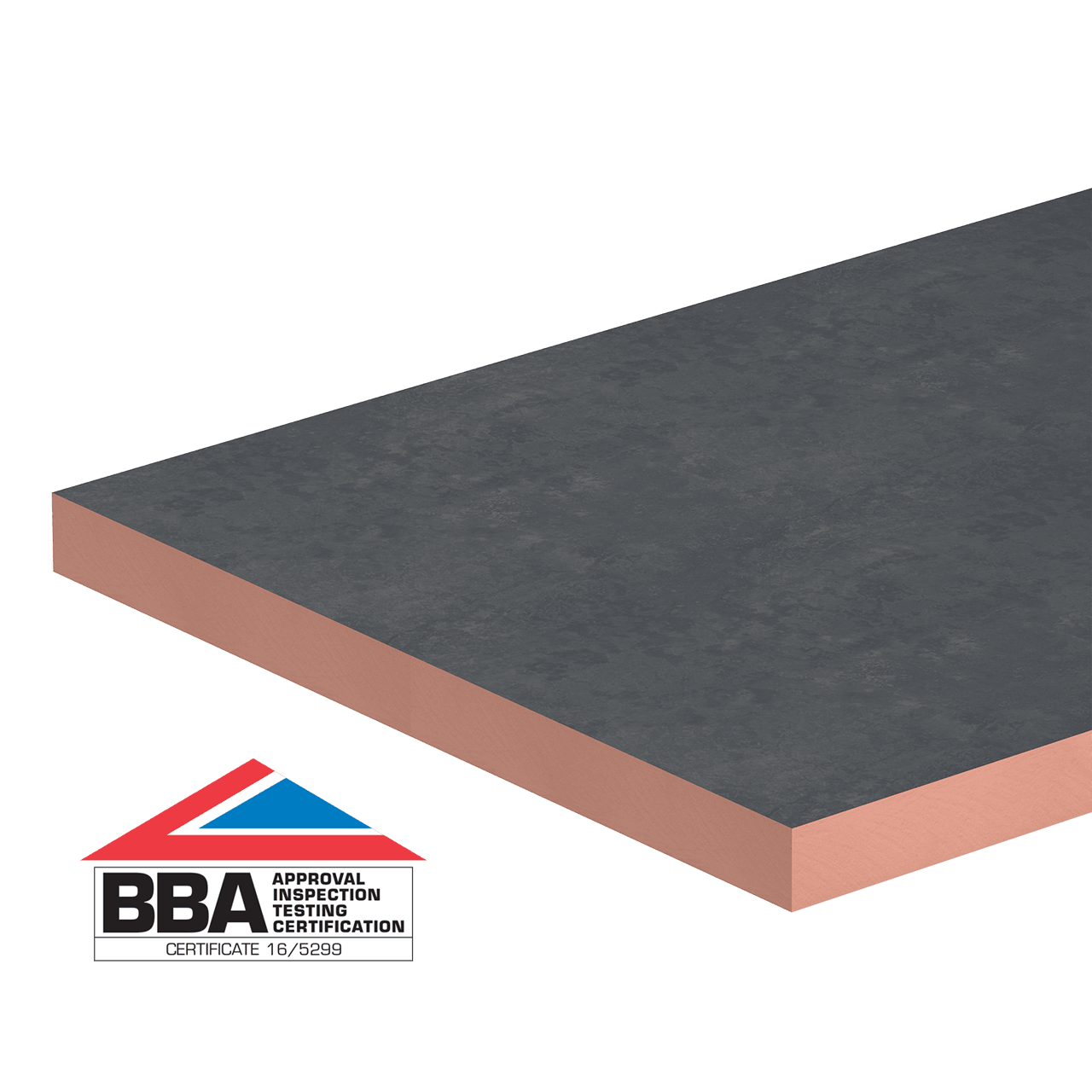
For more general applications, our Kooltherm range comprises the thinnest commonly used insulation products with thermal conductivities as low as 0.019 W/mK. The range covers most areas of the building envelope including floors, walls and pitched roofs.
OPTIM-R vacuum insulation panels (VIPs) can offer a problem-solving solution that is well suited for EnerPHit projects. The VIPs can achieve a thermal conductivity of 0.007 W/mK allowing areas such as solid floors to be insulated with much thinner constructions than would otherwise be possible. This can help to limit any loss of floor to ceiling height within these spaces.
On site training and support
Build your team’s knowledge with onsite training and support from one of our Product Technicians. The presentations cover the full range of Kingspan products and applications from flooring to roofing and everything in-between with both internal and external wall insulations.
Learn more about the product awareness training service