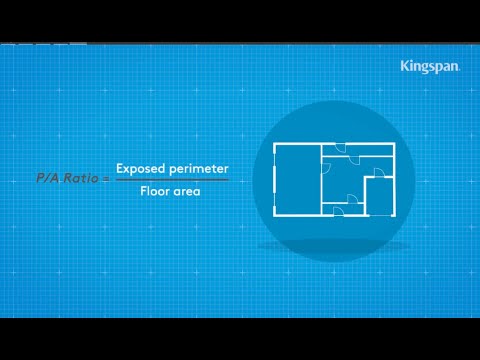
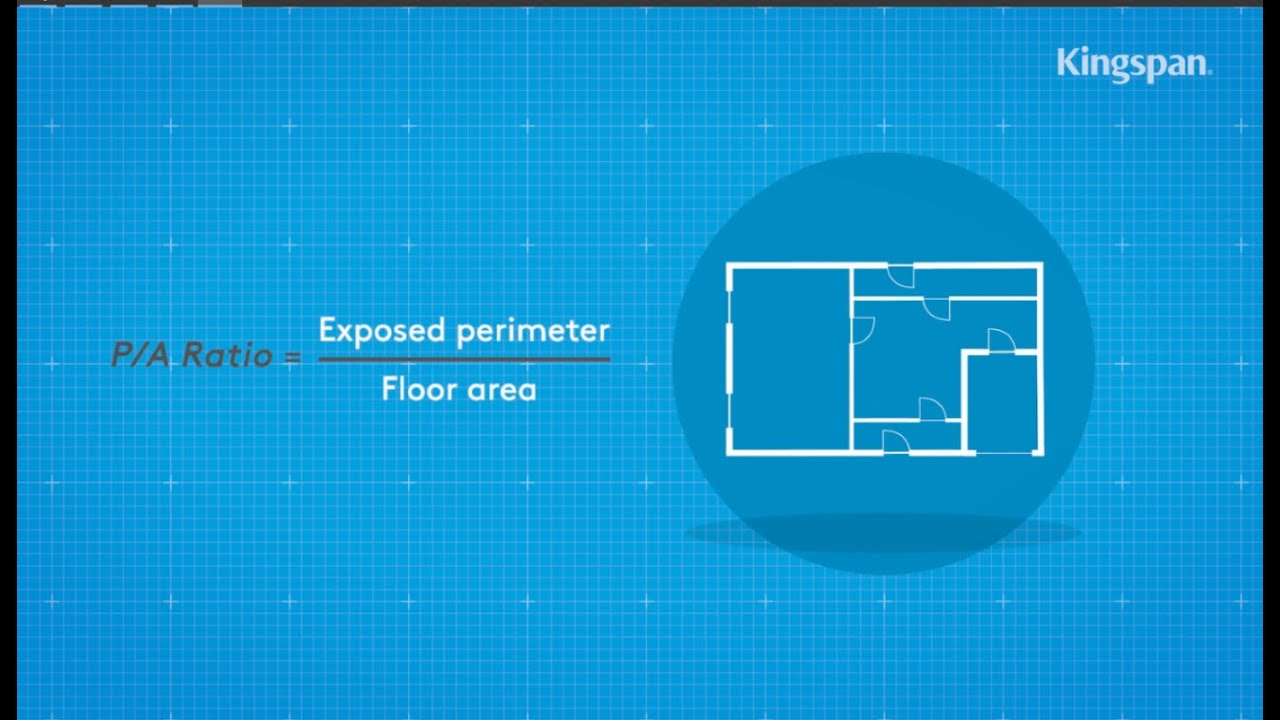
When trying to identify the thickness of insulation required to insulate a floor, many of us are faced with the onerous task of calculating the perimeter/area (P/A) ratio.
Whilst establishing the area of a floor is fairly straightforward, identifying the exposed perimeter can cause quite a lot of confusion:
“What is exposed perimeter?”
“Does this wall count?”
“What if it’s next to my garage?”
Hopefully, by the end of this short guide, understanding and calculating the P/A ratio, or more specifically the exposed perimeter for your floor, will become somewhat of a walk in the park.
The exposed perimeter is essentially the total length of all exposed walls surrounding the floor you are proposing to insulate. This includes externally exposed walls and walls adjacent to an internal unheated space. Unlike the total floor perimeter, the exposed perimeter focuses solely on the edges where heat loss would occur.
For example, if you were to imagine this diagram resembled your home and you were looking to insulate the living room - the sum of edges A, B, C and D would make up the total perimeter of the living room. In comparison, the sum of edges A, B and C, which are all either externally exposed to the outside elements or to the unheated garage, would make up the exposed perimeter measurement.