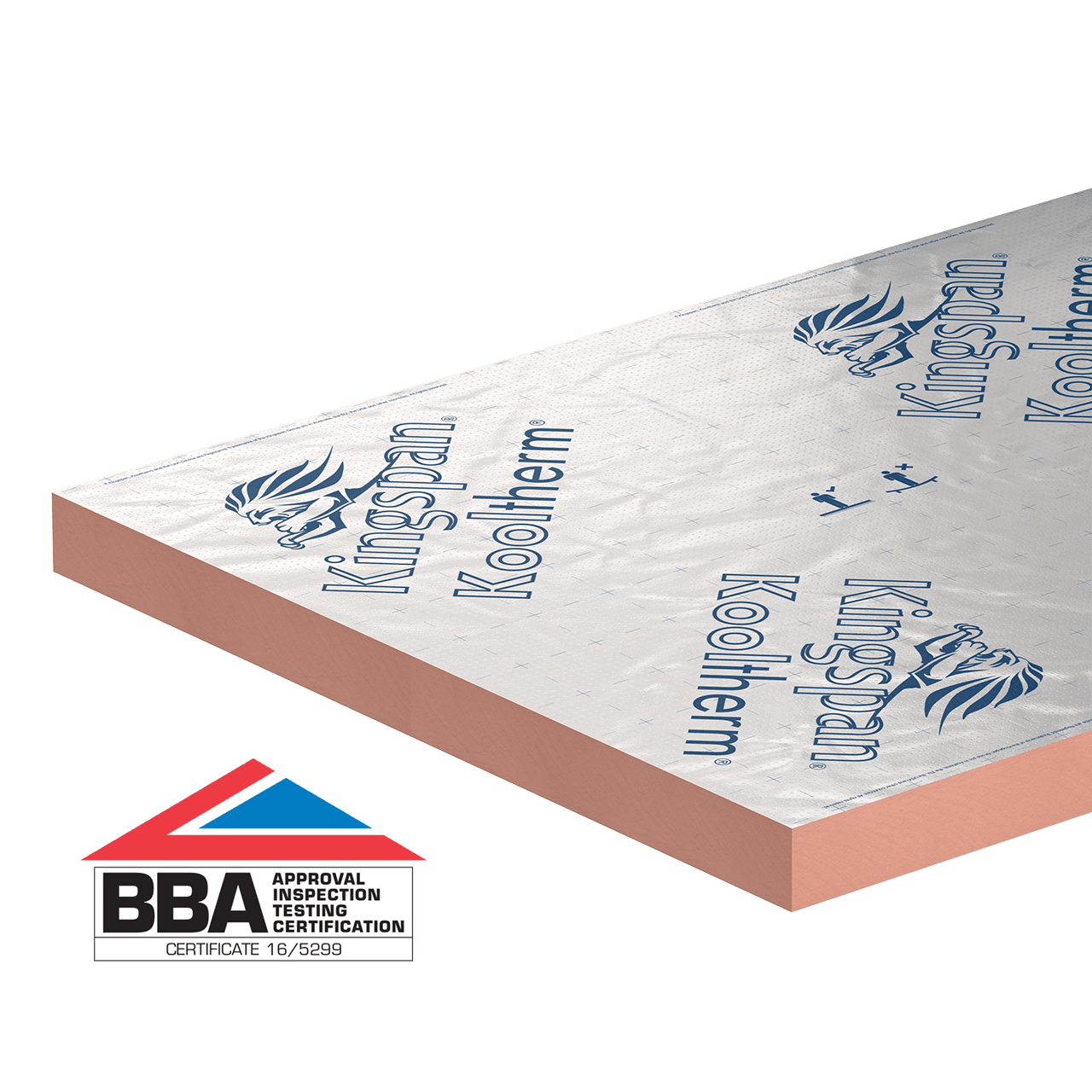
In building construction, roof pitch is a numerical measure of the steepness of a roof. There are typically two different ways to insulate a roof - a warm roof and a cold roof.

Warm pitched roofs
A warm roof will make the entire structure of the building warm in an attempt to avoid any cold bridging. It has a continuous insulation layer above the rafters and immediately below its weatherproof membrane. A warm roof construction has many benefits over a traditional ‘cold roof'. It is essentially a ‘breathable roof construction’, which allows moisture to escape, which in turn prevents dampness and any associated decay problems. A warm roof construction allows heat to be conserved within a property – without the need for a ventilation system.