Here in the UK, many homes were built before there was any requirement for insulation, or when the standards were fairly low. By adding insulation, you can potentially save hundreds of pounds in annual heating bills. Before fitting any insulation, it is a good idea to plan out what improvements are needed and the order you plan to do them in.
In this article we discuss why a “fabric first” approach makes sense, the different areas you can fit insulation, and how to decide where to start.
Adding insulation to your home can form part of what is known as a “fabric first” approach. This is where you prioritise making improvements to your building fabric (meaning the walls, floor and roof) before adding other energy efficiency measures such as fitting solar PV panels. This approach helps to minimise the amount of energy that is needed to heat your home.
A fabric first approach has several benefits for you as a homeowner which can include cutting your annual energy bills, making you less vulnerable to energy price changes and meaning that you can install smaller, more efficient boilers or heat appliances. It should also help to limit the peak demand for the National Grid as we switch to heating systems which use electricity such as heat pumps.
In addition to fitting insulation, improvements to the building fabric might include adding external shading to reduce heat gains during the summer or ensuring your home has proper ventilation.
What insulation options are available for my home?
There are a wide range of insulation products now available to cover the different types of constructions found in a typical home:
Pitched Roofs
Insulating at joist level – also known as a “cold loft” approach. The insulation is fitted between and above the joists which run above your top floor ceiling. This is often the cheapest and simplest insulation improvement. A wide range of products are available, including glass and mineral wool rolls, wood fibre insulation and rigid PIR boards such as Thermapitch TP10.
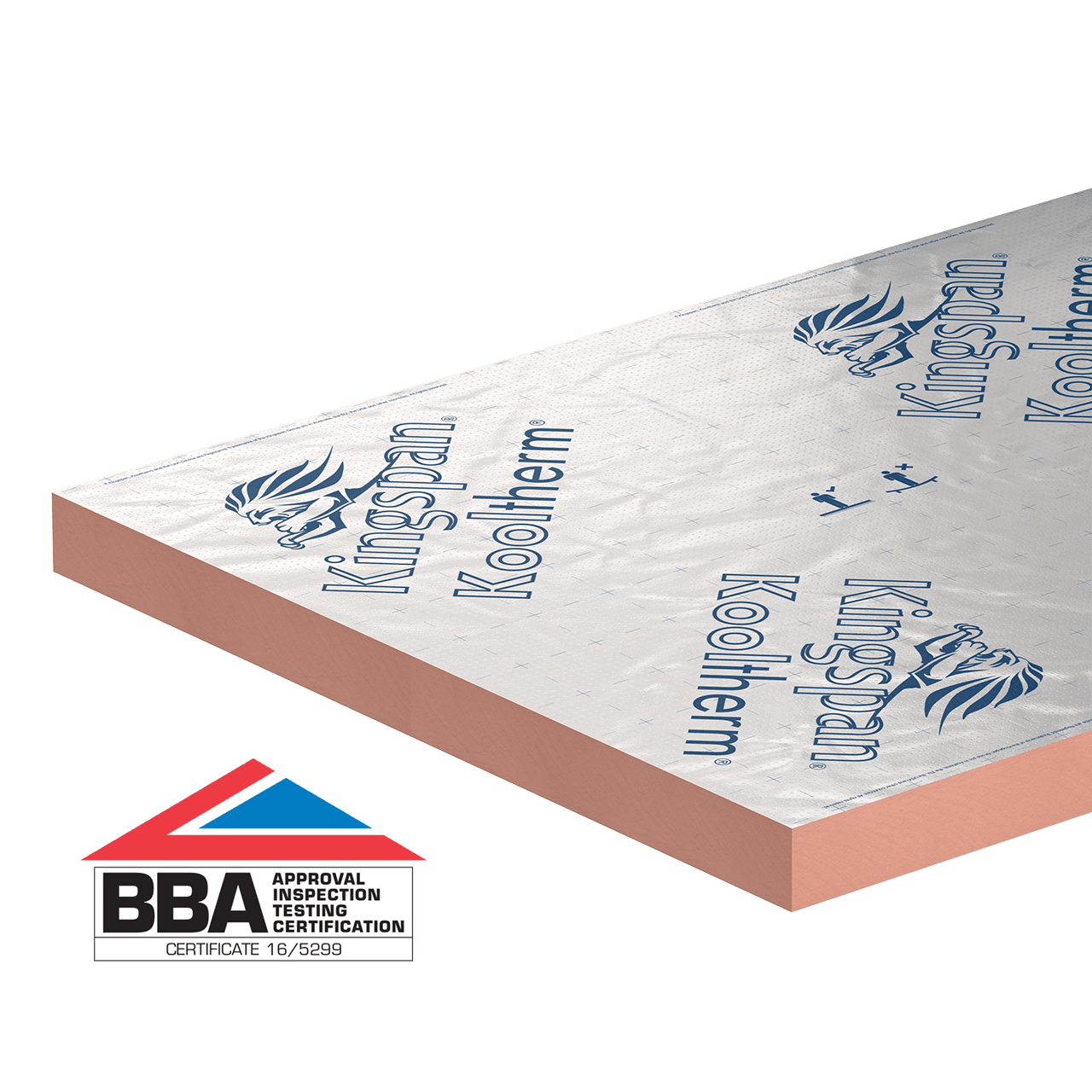
Insulating at rafter level – alternatively, if you want to create a “warm loft” or an attic conversion then insulation can be fitted at rafter level. Where the existing tiles are being retained, this can be achieved by fitting a rigid insulation, like Kooltherm K107 Pitched Roof Board between the rafters and insulated drylining, such as Kooltherm K118 Insulated Plasterboard below. On the other hand, if the tiles are being replaced you can choose to fit insulation between and above the rafters – helping to maximise headroom within the finished space.
Warm roof insulation – for an existing flat roof, we recommend fitting insulation above the deck. Depending on the condition of the existing roof deck, it may be possible to install the new insulation over the existing deck and waterproofing system, or it may be necessary to strip this back. We offer a range of flat roof insulation boards for different waterproofing systems:
Thermaroof TR24 – suitable for use with torch applied waterproofing systems.
Thermaroof TR26 - suitable for use with most mechanically fixed single-ply waterproofing systems.
Thermaroof TR27 – suitable for use with fully adhered single-ply, partially bonded built-up felt, mastic asphalt or cold liquid applied waterproofing systems.
Suspended floor insulation – these floors are common in pre-war homes and feature timber joists which are elevated above the ground for ventilation. Insulation products, such as Kooltherm K103 Floorboard, are fitted between these joists.
Solid or beam and block floor insulation – these feature either a concrete slab, or blocks suspended on concrete beams. In either case, the insulation will typically need to be fitted above the existing floor level. In some cases, a commonly used insulation product like Kooltherm K103 Floorboard may be suitable. Alternatively, where you want to minimise any loss of headroom in your home a highly efficient specialist insulation, such as OPTIM-R Flooring System can be used.
Cavity wall insulation – for existing cavity walls, the standard approach is to blow insulation beads into the cavity. Depending on the condition of the walls, and how likely they are to be exposed to driving rain, some additional treatments may need to be added to the external walls to limit moisture from entering the cavity and potentially leading to damp.
External wall insulation (EWI) – if your home has solid walls or very narrow cavities (typically for pre-1920s homes) one option is to install an EWI system, such as Kooltherm K5 External Wall Board, on the outer face of your home walls with a suitable external render system. This helps to wrap the existing home, limiting heat loss.
Internal wall insulation (IWI) – where EWI isn’t suitable or desirable for a home, the alternative is to fit internal wall insulation on the inner face of your external walls. There are a range of insulation solutions available which can be moisture open or moisture closed (such as Kooltherm K118 Insulated Plasterboard). The IWI system needs to be carefully designed for your home, considering a number of factors including how the existing construction handles moisture.
Why is it important to plan your home energy improvements?
Fitting insulation within your home will not only affect how well it keeps heat in but can also have an impact on other aspects of how it functions, including how well ventilated it is and how the walls, floor and roof handle moisture. To avoid potential issues, it is important that the measures that are installed are appropriate for your home, and that any underlying issues with its condition are addressed beforehand. The best way to do this is through a “whole house” improvement plan developed by a qualified retrofit coordinator.
How does a whole house retrofit plan work?
Once you select a retrofit coordinator, they will arrange a survey of your home to understand its design, condition and any remedial work required. They will also develop a long-term improvement plan for your property which includes both insulation measures and other improvements you may be interested in such as having a heat pump fitted, or solar PV panels installed on the roof.
The plan will not only recommend the most suitable improvements, but also the best order for them to be carried out and typical costs involved. The coordinator can also help to oversee the actual improvement work, selecting suitably qualified installers, getting quotes and briefing them on the work. They should also help to ensure the work is carried out correctly and arrange any remedial work if needed.
This process can help to avoid potential issues and streamline the whole process of retrofitting your home.